

In the polymer manufacturing industry, the terms "thermoplastic" and "thermoset" are often heard in close proximity, yet they represent fundamentally different material sciences. While they may sound related, they are not interchangeable. Liquid Silicone Rubbers (LSRs) are classified as thermosets, whereas TPE materials are, as the name suggests, thermoplastics. Each possesses distinct material properties, and importantly for manufacturers, they behave inversely during the molding process.
Both thermoplastic elastomers and liquid silicone rubber serve as advanced alternatives to traditional synthetic or natural rubbers. They are both highly effective for a myriad of industrial applications. However, to choose the right machinery and manufacturing path, one must understand the significant differences between thermoplastic characteristics and those of a thermoset silicone elastomer.
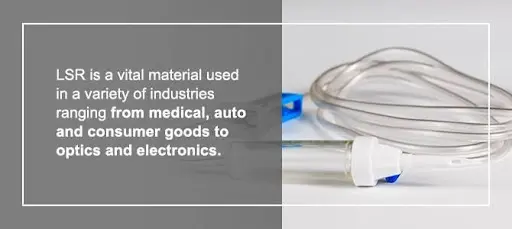
What Is LSR?
Silicone is derived from quartz sand (silica), a raw material available in practically unlimited quantities globally. Liquid silicone rubber is a synthetic resin where polymers are joined together by a chemical bond. The defining characteristic of LSR is that heating the mixture causes polymer cross-linking. This results in an irreversible chemical bond, giving the substance permanent strength and shape after the curing process.
When you apply heat to LSR, it hardens. This is the direct opposite of TPE behavior. When LSR is heated—initially during the injection molding process and often secondarily during a post-cure process—it vulcanizes. This vulcanization "locks in" the physical properties, such as tensile strength, flexural strength, and heat distortion temperature. One of the primary purposes for performing post-curing (heating the molded parts in an industrial oven) is to accelerate this vulcanization to maximize performance and, in some cases, to drive out volatiles.
High-quality LSR is typically a Platinum-cured, two-part formula. These components are mixed just prior to reaching the injection mold. One element acts as the catalyst that initiates the cross-linking progression. The rubber undergoes chemical cross-linking inside the hot mold, a process called curing. Depending on the thickness of the part and the temperature of the mold, this process can take anywhere from seconds to several minutes.
Silicone’s molecular structure features alternating oxygen and silicon atoms and can come in many forms, including LSR, heat-cured rubber (HCR), and room temperature vulcanized rubber (RTV).
What Are Thermoplastic Elastomers?
Also commonly referred to as thermoplastic rubber, a thermoplastic elastomer is a compound or blend of polymers that melts and forms into plastic when heated. Crucially, it hardens when cooled, but its chemistry does not change from one form to the next. It is a physical phase change, not a chemical one.
A thermoplastic is generally a fossil-based plastic polymer material. However, the industry is seeing the introduction of bio-based TPE solutions derived from sustainable sources such as corn, sugar cane, soy, or vegetable oils.
Manufacturers shape and fabricate TPE when temperatures reach their specific melting point. Although TPE has a similar elasticity to cross-linked materials like LSR, its elastomeric behavior is not due to permanent cross-linking properties. Consequently, if you reheat a TPE part, it will melt again.
Chemical bonding does not take place within thermoplastic elastomers in the same way it does in thermosets. By applying heat to plastic pellets, they liquefy. They are then pressure-molded into various components that retain their shape upon cooling. To understand the thermoplastic elastomer meaning fully, one must recognize it as a bridge between rubber and plastic. The seven primary types of TPE solutions include:
Styrenic block copolymer (TPE-S)
Melt processable rubber (MPR)
Thermoplastic olefinic elastomer (TPE-O)
Thermoplastic polyester elastomer (TPE-E)
Thermoplastic vulcanisate (TPE-V)
Thermoplastic amide elastomer (TPE-A)
Thermoplastic polyurethane elastomer (TPU)
In short, TPE is a class of copolymers, often made with a mechanical mix of plastic and rubber phases.
Choosing the Best Material for your Application
Both LSRs and TPEs have distinct advantages. Choosing the best material—and consequently the right molding equipment—will depend on your final product, your budget, and most importantly, the performance environment required.
When is LSR the best choice?
When debating between silicones or thermoplastic elastomers, the critical considerations are usually temperature endurance, compression set, and chemical resistance. Traditional rubbers like natural rubber, nitrile, or EPDM tend to have modest working temperature ranges (e.g., -50°C to<100°C). When analyzing thermoplastic elastomer vs silicone, LSR offers unwavering performance in a significantly wider range of temperatures, exceeding TPE capabilities on both the high and low ends of the spectrum.
LSR can operate continuously in environments ranging from 350 to 400 degrees F (175 – 205 degrees C) without altering its shape or losing mechanical integrity. Over this range of extreme temperatures—whether scorching heat or freezing cold—the material properties remain stable.
For instance, LSR maintains its flexibility and low compression set (the ability to return to original shape after stretching) even down to -100 degrees F. These attributes are highly desirable in the automotive industry. LSR is the standard for under-the-hood components like sensors, connectors, seals, and gaskets. It is also found inside the vehicle cabin in HVAC vibration dampeners and key fob gaskets. Unlike LSR, thermoplastic elastomers are generally not suitable for these extremes and may deform or crack.
Furthermore, because of its low viscosity, LSR offers engineers incredible design flexibility. It can fill very thin walls and complex micro-features. This makes it superior for pressure-sensitive applications, such as thin membranes in gas appliances (water heaters) or medical fluid management devices (ophthalmology pumps). LSR is available in a wide range of durometers (stiffness), typically between 20 – 80 Shore A.
Chemically, LSR is robust. It resists rigorous cleaning agents and sterilization methods, making it ideal for medical applications. Being UV-stable and ozone-resistant, it is also the perfect choice for outdoor products exposed to the elements for decades.
When are TPEs the best choice?
From a processing perspective, thermoplastic elastomers can offer cost savings. The raw material is often priced lower than silicone elastomers, and the processing consumes less energy because it avoids the energy-intensive cross-linking curing cycles. TPE melts at high temperatures, which grants it recyclability properties; scrap material can often be re-ground and re-processed, reducing waste.
TPEs offer benefits similar to silicone, including vibration resistance and hypoallergenic properties, but strictly within limited temperature ranges. For this reason, they are excellent for consumer goods but less suited for automotive under-the-hood applications.
However, for seals requiring low permeability, TPEs can provide a strong barrier against oxidation and moisture. TPE formulations can also be engineered to be non-tacky, repelling dirt and offering a smooth tactile finish, which is excellent for consumer electronics grips.
Additional advantages of TPE include:
Abrasion resistance
Excellent colorability
Heat-sealability
High fatigue resistance
Low specific gravity (lighter weight parts)
Uses of Thermoplastic Elastomer
Depending on your requirements, common uses of TPEs include items such as baby bottle caps, closure liners, impact-resistant housings, and seal rings. While silicone tpe comparisons often highlight silicone's superiority in medical grades, TPE is a better alternative than latex or PVC for general health applications like gloves due to lower allergen risks compared to latex.
LSR COMPARISON VS. THERMOPLASTIC ELASTOMER
Let's dive deeper into the specific material and processing differences.
Material
LSR
The use of LSR is experiencing rapid growth in medical and healthcare applications. Its ability to withstand autoclaving and gamma sterilization, combined with its capability for micro-molding, makes it indispensable for modern medical devices. It is the premier material for human contact products.
Hardness ranges from a soft 3 to a rigid 80 durometer A. The most common is 50 durometer A, offering a balanced blend of tensile and tear strength. Low durometer silicone elastomers, known as gels, can even reach below 10 Shore A for specialized cushioning.
TPE
Because TPEs are thermoplastics, the resin can be reused multiple times within acceptable limits. Changing from liquid to solid is physical, not chemical. TPE hardness is also measured on the Shore scale. Soft gel TPEs range from 20 Shore OO to 90 Shore A. Harder grades can reach up to 85 Shore D, which is comparable to hard plastics.
Molding Processes
The primary difference lies in the thermal reaction. LSR undergoes a chemical cross-linking reaction by mixing two components (A/B) and applying heat. TPE involves melting pellets and cooling them.
Both materials support Overmolding and 2-shot molding. However, TPEs bond easily to a broad range of plastics due to similar melt temperatures. LSRs require high curing temperatures, limiting the substrate materials they can bond to (typically high-performance engineering plastics like Polycarbonate or glass-filled PA/PBT).
LSR Injection Molding Process
When producing LSR products, specialized manufacturing cells are required. Silicone arrives in drums containing equal parts of Component A (catalyst) and Component B (cross-linker). These must be kept separate until the moment of processing.
The critical step involves feeding both components into a barrel in a precise 1:1 ratio. This requires high-precision metering pumps. Ensuring accuracy here is paramount for material performance and minimal contamination. Manufacturers utilizing advanced feeding systems from reputable China Injection feeder Manufacturers can ensure that this mixing ratio remains stable, preventing material waste and ensuring consistent part quality.
LSR has a consistency similar to peanut butter. After mixing (where color is also added), the material is chilled and then injected into a hot mold. LSR molds require precision venting and often vacuum systems because the material flows very fast (low viscosity). However, because LSR shrinks more than TPE, undercuts can often be pulled out of the mold without complex mechanical slides.
TPE Injection Molding Process
The TPE process is more akin to standard plastic molding. Pellets are added to a hopper, melted in a hot barrel, and injected into a cool mold (70-120°F). It is generally less technically demanding than LSR molding but lacks the precision possibilities of liquid injection.
Product Performance
In the battle of silicones vs. TPEs, silicones tend to offer higher quality at a higher price point. Though more expensive per pound, LSR offers performance longevity that no other rubber can match. While TPEs occupy the middle ground of performance and cost, LSR is the clear winner for critical, high-end, or extreme environment applications.
Liquid Silicone Rubber Solutions from Debiao
At Debiao, Liquid Silicone Rubber equipment is our exclusive focus. We possess the experience, engineering knowledge, and advanced technology necessary to perfect a stable, consistent molding process. Unlike generalist machinery providers, we understand the specific nuances of silicone.
We empower our clients to produce custom LSR parts, LSR multi-shot components, and complex over-molded products. As one of the industry's leading Silicone injection machine Manufacturers, we provide the hardware foundation that allows manufacturers to create high-quality solutions using the unique characteristics of LSR.
Our experts work with customers one-on-one to convert concepts into production reality. With our proficiency in LSR injection molding technology, the possibilities for your production line are endless. Our forte is enabling high-volume, long-term production utilizing high-capacity molds with low parts-per-million defect rates.
Contact Us
The benefits of choosing LSR for your high-volume component requirements range from biocompatibility and thermal stability to chemical resistance. We know every aspect of silicone processing machinery and how it can benefit your company.
To learn more about LSR equipment solutions at Debiao, please contact us for more information or to evaluate your current or upcoming project.
Summary
In conclusion, while thermoplastic elastomers (TPE) and Liquid Silicone Rubber (LSR) share some functional similarities, they are distinct materials suited for different applications. TPEs offer cost-effectiveness and recyclability for standard consumer goods, whereas LSR provides unmatched thermal stability, chemical resistance, and biocompatibility for medical and automotive sectors. The choice between them dictates the manufacturing process: physical melting for TPE versus chemical cross-linking for LSR. At Debiao, we specialize in the advanced machinery required for the latter, providing manufacturers with the precision equipment needed to leverage the superior properties of Liquid Silicone Rubber.