
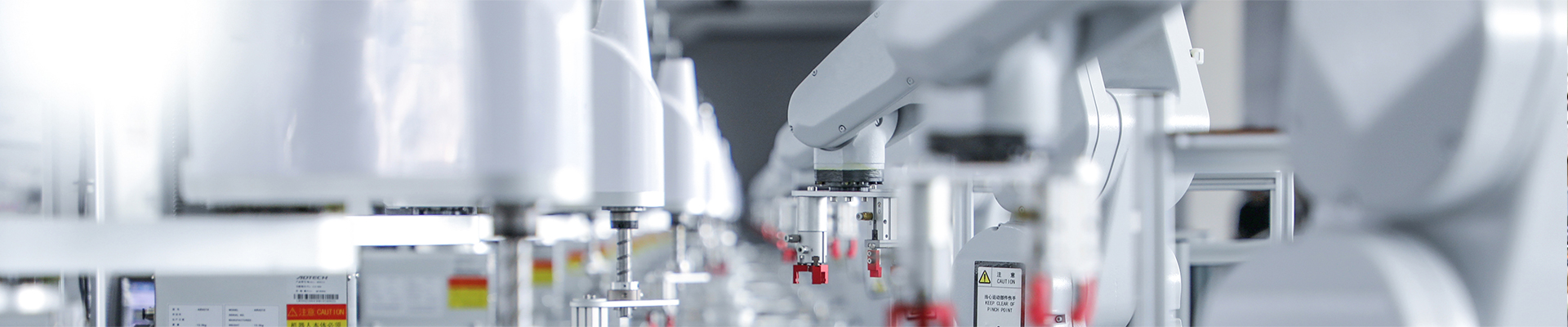
Since its emergence in the late 1970s, liquid silicone rubber (LSR) has revolutionized the manufacturing landscape, rapidly becoming the material of choice for high-precision parts across medical, automotive, and consumer sectors. Unlike traditional high-consistency rubber (HCR) or standard thermoplastic processing, the lsr injection molding process requires specific expertise and specialized machinery to unlock its full potential.
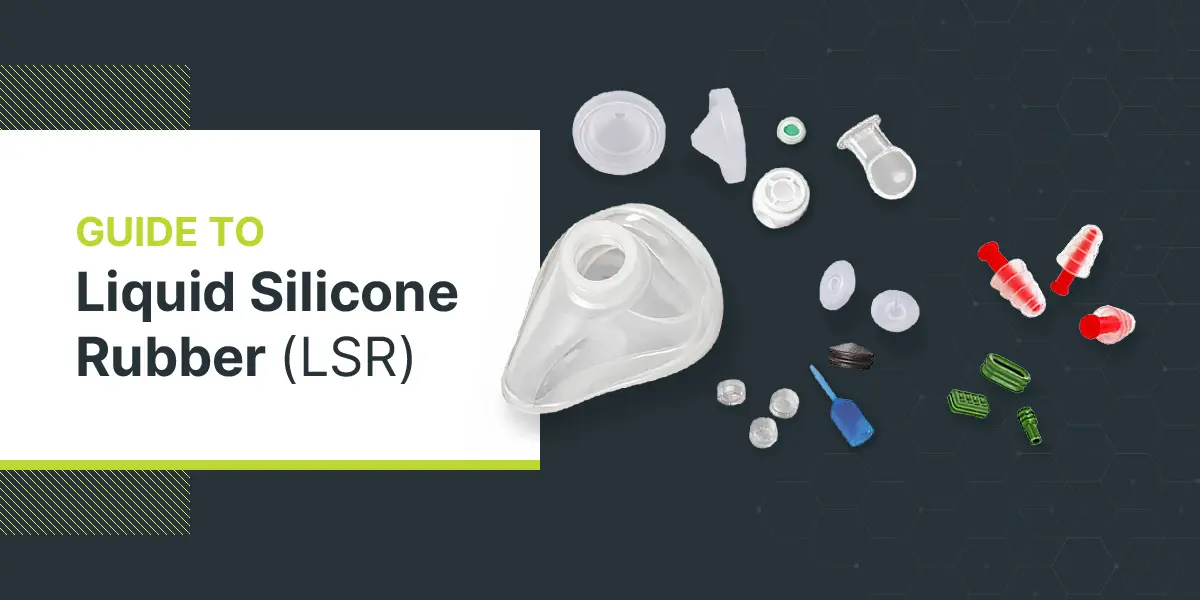
At Debiao, we have spent over two decades mastering the equipment that powers this industry. This guide delves into the chemistry, applications, and production nuances of LSR, offering insights from an equipment manufacturer's perspective.
What Is LSR Material?
To understand the manufacturing process, we must first answer the fundamental question: what is lsr? Fundamentally, LSR is an inorganic polymer comprised of silicon (Si), oxygen (O), carbon (C), and hydrogen (H). The core chemical chain, known as the backbone, consists of alternating silicon and oxygen atoms, forming a structure called siloxane.
To achieve the robust final characteristics manufacturers rely on, the material undergoes a curing process where catalysts are introduced. This creates chemical bonds between the backbones, known as crosslinks. While peroxide systems exist, high-quality lsr silicone is typically platinum-cured. Platinum curing offers distinct advantages, including superior tensile and tear strength, exceptional clarity, and a cleaner finish free of peroxide residue, which is essential for medical and food-grade applications.
LSR for Multiple Applications
The versatility of LSR stems from its siloxane bond. This inorganic backbone ensures the material does not react adversely with biological agents, yet it remains adaptable enough to be combined with organic chemical groups for specialized performance. This unique chemistry delivers mechanical strength that outperforms many standard elastomers.
Ideally suited for automation, lsr injection processes allow for high-volume production with consistent part quality. The material’s "compression set"—its ability to rebound to its original shape after force is applied—makes it indispensable for dynamic applications like push-buttons, diaphragms, and valves.
Key LSR Properties:
Biocompatibility: Rigorous testing confirms LSR’s compatibility with human tissue. It is hypoallergenic and resistant to bacterial growth, making it the gold standard for skin-contact products.
Tasteless and Odorless: Formulations can meet stringent FDA and BfR standards, making them perfect for food, beverage, and infant care products.
Durability: LSR parts endure harsh realities, from UV exposure to the intense heat under a vehicle's hood, resisting aging and weathering significantly better than organic rubbers.
Chemical Resistance: It resists oxidation, water, and various chemical solutions. This allows for sterilization via steam autoclaving, ethylene oxide (ETO), and gamma radiation without degrading the material.
Temperature Endurance: LSR maintains stability from frigid lows of -60°C up to scorching highs of 180°C, making it ubiquitous in household appliances like dishwashers and water heaters.
Mechanical Strength: With hardness ranging from a soft 5 Shore A to a rigid 80 Shore A, LSR offers excellent elongation and tear strength.
Electrical Insulation: Excellent insulating properties make it vital for the electronics sector, particularly in the EV battery market.
Transparency: Naturally translucent, LSR can be pigmented to match any custom color requirement without losing its physical properties.
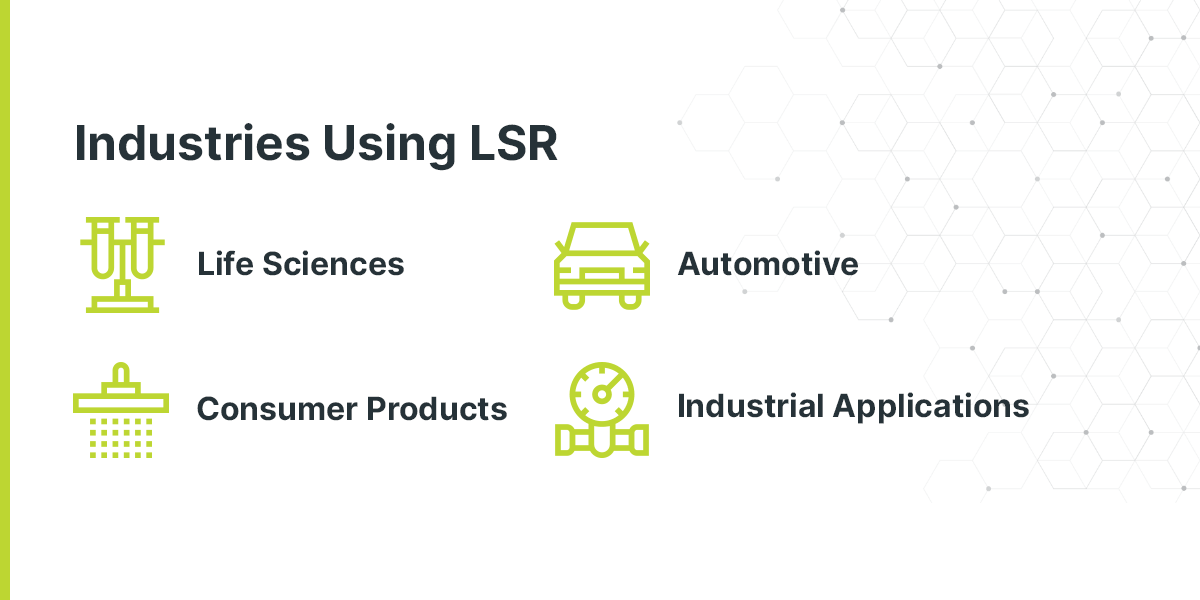
Industries Using LSR Materials
The versatility of lsr molding allows for deployment across thousands of applications. Debiao’s fully automated injection molding cells are engineered to support precision manufacturing across these diverse sectors.
Life Sciences
The medical field relies heavily on LSR due to its inert characteristics and biocompatibility. In an industry where failure is not an option, the stability of LSR ensures patient safety. Applications include intricate respirator masks, precision valves, diaphragms, surgical instrument handles, and implantable drug delivery devices. The material’s ability to fill micro-cavities allows for the creation of parts with extremely tight tolerances.
Automotive
Modern vehicles are subjected to punishing environments. Under the hood, components face extreme heat and vibration. LSR excels here. It is used for wire harness seals, electrical connectors, bellows, and vibration dampeners. Furthermore, as the industry shifts toward electric vehicles, LSR is becoming critical for battery sealing solutions.
Consumer Products
In the consumer realm, aesthetics meet functionality. Manufacturers specify LSR for its tactile feel—soft yet durable. It creates watertight seals in showerheads, vibration-resistant housings for electric toothbrushes, and soft-touch surfaces for headphones. Its safety profile makes it the primary material for baby bottle nipples and pacifiers.
Industrial Applications
Industrial safety equipment, such as smoke detectors and carbon monoxide sensors, depends on LSR diaphragms. These components must remain flexible and responsive even after years of dormancy. In gas water heaters and furnaces, LSR membranes detect subtle pressure changes to control gas flow safely.
Part Design and Materials
Designing for LSR differs significantly from thermoplastics. To produce a component that is optimized for manufacturing, engineers must understand the material's unique flow behavior. A successful product design considers functional use, assembly fit, and load requirements.
Key design considerations include:
Geometry: Because LSR flows easily, it can fill thin wall sections with minimal challenges.
Flash Control: Tooling must be precise to prevent "flash" (excess material) due to LSR's low viscosity.
Sink Marks: Unlike plastics, LSR does not suffer from sink marks, allowing for variable wall thicknesses.
General-purpose LSR is suitable for most standard parts, but additives can create specialized grades for high-temperature endurance or self-adhesive properties for multi-shot (overmolding) applications, eliminating the need for primers.
LSR Tooling & Molding
Producing a high-precision molded LSR part begins with the tooling. Building a production mold involves high-precision CNC milling and EDM using premium hardened stainless steel. The lsr moulding process (using the UK variation often seen in global specs) requires molds that can withstand heat—typically around 180°C to 215°C—while keeping the runner system cold to prevent premature curing.
Challenges in tooling include managing the material's thermal expansion and its abrasive nature. However, because LSR is flexible, parts can often be removed from undercuts without the complex slide mechanisms required in plastic molding, simplifying certain aspects of mold design.
Liquid Silicone Rubber Part Production
The Liquid Injection Molding (LIM) process is distinct from traditional rubber processing. It utilizes a mechanical mixing method that blends a two-component compound before it enters the mold. Stability in this process is critical.
As one of the industry's premier Silicone injection machine Manufacturers, Debiao designs machinery that ensures precise control over shot size, pressure, and temperature. The process generally follows these steps:
Material Delivery: The uncured silicone arrives in two drums: Component A (base) and Component B (catalyst). A precision pumping system is required to move this material. We recommend integrating high-quality components from specialized China Injection feeder Manufacturers to ensure a perfect 1:1 ratio is delivered to the mixing unit.
Injection Setup: The machine is programmed with specific injection rates and pressures tailored to the part design.
Clamping and Injection: The mold closes, and the screw pushes the mixed material into the hot cavity.
Curing: Heat triggers the cross-linking process, solidifying the rubber rapidly.
Demolding: The mold opens, and an automated system removes the parts. Automation is key here to maintain hygiene and speed.
Benefits of Injection Molding
Why choose lsr injection molding over compression molding? The advantages are clear:
High-Volume Scalability: The process supports "lights-out manufacturing" with minimal human intervention.
Contamination Control: LIM is a closed-loop system. The material travels from the drum to the mold without exposure to the environment, which is vital for medical grades.
Rapid Cycle Times: Platinum-cured systems cure quickly in heated molds, significantly increasing output compared to gum rubber.
Flashless Production: With high-precision tooling and advanced machinery, material waste is virtually eliminated.
Enhanced Safety: Automated removal systems protect operators from heat and moving parts.
LSR Quality Standards
Quality in LSR production is not an accident; it is the result of rigorous planning and adherence to international standards. Whether it is product design, tooling fabrication, or final production, the manufacturing ecosystem must maintain an unwavering commitment to excellence.
A robust quality system typically includes Advanced Product Quality Planning (APQP), custom validations, and strict control plans. Certifications such as ISO 9001, ISO 13485 (Medical), and IATF 16949 (Automotive) provide assurance that the equipment and processes used are capable of delivering consistent, defect-free parts.
Custom LSR Solutions for Your Business
Debiao was an early pioneer in LSR injection molding technology and today ranks among the top equipment providers globally. Since 2002, our machinery has facilitated the production of billions of liquid silicone rubber parts. We offer our customers a full portfolio of value-added services, from equipment selection for prototyping to setting up high-volume LSR multi-shot production lines.
With 20 years of experience, advanced LSR molding technology, and adherence to certified quality standards, Debiao offers extraordinary solutions and consistent service you can rely on.
Summary
Liquid Silicone Rubber (LSR) represents the pinnacle of modern elastomeric materials, offering unmatched durability, biocompatibility, and thermal resistance. However, leveraging these properties requires more than just raw material; it demands precision machinery and sophisticated process control. As a dedicated partner in the industry, Debiao provides the advanced equipment and technical expertise necessary to optimize the lsr injection molding process. Whether for medical devices, automotive seals, or consumer electronics, our solutions ensure efficiency and quality at every stage of production.
For more information about LSR technology and our equipment capabilities, contact us today to discuss how Debiao can offer a tailored solution to meet your specific production requirements.